


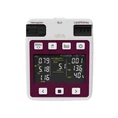
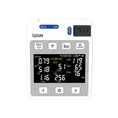
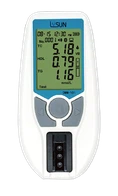


The wholesale diabetic test strip (EGS-101) is a kind of consumables used in conjunction with blood glucose detectors, coated with biological enzymes, and can detect the amount of glucose in peripheral blood through their color changes.
Test principle
The Blood Glucose Test Strip(EGS-101) is used for quantitatively measuring glucose in human peripheral blood or venous whole
blood .This product is only suitable for people to monitor the levels of glucose. The test strip should not be used for the testing ofnewborns.
Advantages
●Highly accurate testing: test strips for use with the Lysun Blood glucose meter range of blood glucose meters(1,2)
●Self testing: monitor blood glucose levels with an at-home test and tiny blood sample
●Compatibility: can be used with any of the LYSUN Blood glucose meter portfolio of blood glucose meters

How to use
1. First of all, you should pay attention to the validity period of the test strips, and you cannot use expired test strips. Check the shelf life of blood glucose test strips before use.
2. The desiccant in the blood sugar test strip can keep the test strip dry. Each time the test strip is taken out, the lid should be tightly closed to prevent the test strip from being damp or the desiccant becoming invalid.
3. The test strip should be stored in the environment of 10-30 ℃, and should be stored in the box to prevent dust adsorption or moisture.
4. Only keep the test paper in the original test paper tube.
5. The support area of the test strip should be kept clean, do not touch it with fingers, and regularly scrub with water to avoid damage to the reaction area of the reaction membrane and affect the monitoring results.
6. Do not touch the test area and the dripping area of the test strip during use.
7. The blood collection site is generally the tip of the finger. Avoid the blood collection site too close to the nail, as this may increase the risk of infection.
8. After blood collection, use 75% alcohol to disinfect the skin. After the disinfection point is completely dry, use the disposable needle equipped with the blood glucose meter to puncture the skin 2 to 3 mm, and the blood will flow out naturally, so that the blood beads match the markings on the test strip, and avoid squeezing forcefully. Blood leads to abnormal exudation of tissue fluid, thereby ensuring the accuracy of blood glucose values.
Storage&Handing
• Store the test strip at a temperature within 1~30 ℃ under the dry place (humidity less than 90% ).
• Do not dispose test strip in high humidity or direct sunlight. Don't freeze the strip.
• Cap the strip vial immediately after removing a strip.
• The test strip is for single use only. Never reuse a test strip that had either blood or solution. Do not bend, cut or fold the strip.
• With clean and dry hands to handle, remove, touch and insert the strip gently.
• Test strip must be used within 3 months after the date the vial was first opened. Write the opening date on the vial label after
opening.
• Expiry Date: Unopened product is valid for 24 months.

|
|
|
|
|
|
|
Accuracy: glucose concentration < 5.55 mM (<100 mg/dl) |
||
|
Within ± 0.28 mM (within ± 5 mg/dl) |
Within ± 0.56 mM (within ± 10 mg/dl) |
Within ± 0.83 mM (within ± 15 mg/dl) |
|
137/246(55.7%) |
223/246(90.7%) |
246/246(100%) |
|
Accuracy: glucose concentration 5.55 mM (100 mg/dl) |
||
|
Within ± 5% |
Within ± 10% |
Within ± 15% |
|
194/474(40.9%) |
358/474(75.5%) |
461/474(97.3%) |
|
Accuracy: glucose concentration between 2.16 mM (38.88 mg/dl) and 31.57 mM (568.26 mg/dl) |
||
|
Within ± 0.83 mM or ± 15% (Within ± 15 mg/dl or ± 15%) |
||
|
707/720(98.2%) |
||
Delivery

Attention
When venous whole blood is used for the test, it can be collected into heparin-containing test tubes within 30 minutes after drawing.
• Interferences: if concentration of ascorbic acid is higher than 3 mg/dl, the test results will be affected. Other interference
substances listed in ISO 15197 will not affect the results.
• Patients undergoing oxygen therapy may yield false results.
• In situations of decreased peripheral blood flow, examples would include but are not limited to severe dehydration, in shock,
or in a hyperosmolar state (with or without ketosis), hypertension, the test results may be false.
• Grossly lipemic patient samples have not been tested and are not recommended for testing with the Blood Glucose Test Strip
(EGS-101)


