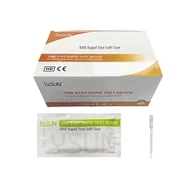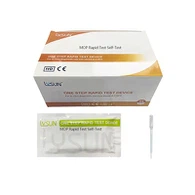


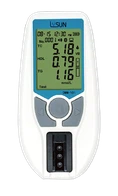

|
Product name |
Cocaine Rapid Test Self-Test |
||||||
|
Item type |
COC-U101 |
||||||
|
Specimens |
Urine |
||||||
|
Packing Specification |
1 kit/ box, 5 kits / box, 25 kits/ box |
||||||
|
Size |
|
||||||
|
Shelf life |
2 year |
||||||
|
Test Time |
Waiting about 5 minutes |
||||||
|
Certificate |
CE, ISO:13485 |
||||||
|
OEM |
Acceptable |
||||||
|
Service condition |
The kit should be stored at 2-30°C |
Cocaine, also known as cocaine, chemical name is benzyl alkaloid. It is mostly in the form of white crystals, odorless, and has a bitter and numb taste. In medicine, it is used as a local anesthetic or vasoconstrictor. Due to its good anesthetic effect and strong penetration, it is mainly used for surface anesthesia, but due to its strong toxicity, it is not suitable for injection. At the same time, it can be used as a strong natural central stimulant, but also leads to abuse due to its stimulating effect on the central nervous system. Since 1985, it has become one of the major drugs worldwide, mostly in the Americas and Europe.
Cocaine has damaging effects on the digestive system, immune system, cardiovascular system, and urogenital system, especially as a dose-dependent hepatotoxin, which can lead to liver cell necrosis. But unlike other drugs, the use of small amounts of cocaine or substances containing cocaine can indeed have the effect of eliminating fatigue and improving mood (exact dosage is still not accurate and the range fluctuates greatly). Research suggests that it can block nerve conduction in the human body, generate local anesthesia, and stimulate the cerebral cortex and central nervous system by enhancing the activity of chemicals in the body, such as dopamine. Showing high emotions, hyperactivity, and even a tendency towards aggression. Further research has also confirmed that the structure and function of corresponding brain regions undergo changes after the use of cocaine.