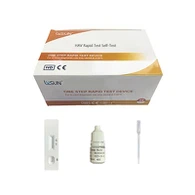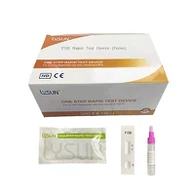


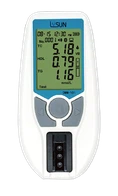

Hepatitis C Virus Rapid Test Self Test is a reagent used to detect antibodies against hepatitis C virus (HCV). This test can provide accurate diagnostic results within 20 minutes and is suitable for whole blood samples taken from fingertips and veins.
The following are the key features of this detection:
Fast: In on-site testing, results can be obtained in just 20 minutes.
High accuracy: The accuracy of rapid detection of HCV exceeds 98% and can detect multiple HCV genotypes.
Easy to use: can be used for fingertip and venous blood collection, and meets CLIA exemption standards.
Flexible: Suitable for both clinical and non clinical environments.
This HCV rapid self testing reagent is a convenient and reliable choice, especially suitable for HCV patients who do not use traditional services for testing and prefer self-care. Please note that this is only a quick detection method. If you suspect that you have contracted hepatitis C, please consult a doctor for more detailed diagnosis and advice
|
Product name |
Hepatitis C Virus Rapid Test Self-Test |
||||||
|
Item type |
HCV-W21 |
||||||
|
Specimens |
Whole blood/Plasma/Serum |
||||||
|
Packing Specification |
1 kit/ box, 5 kits / box, 25 kits/ box |
||||||
|
Size |
|
||||||
|
Shelf life |
2 year |
||||||
|
Test Time |
Waiting about 15 minutes |
||||||
|
Certificate |
CE, ISO:13485 |
||||||
|
OEM |
Acceptable |
||||||
|
Service condition |
The kit should be stored at 2-30°C |

How sensitive and specific is the rapid detection of HCV?
The sensitivity and specificity of rapid detection of HCV are key indicators for evaluating its performance. Let me explain in detail for you:
1. Sensitivity: also known as true positive rate, refers to the proportion of people who are actually infected with hepatitis C virus (HCV) and have a positive test result. High sensitivity means that testing can accurately detect infected individuals and reduce the risk of missed diagnosis. Usually expressed as a percentage.
2. Specificity: also known as true negative rate, refers to the proportion of people who have not actually been infected with HCV and test results are negative. High specificity means that testing can accurately exclude non infected individuals and reduce the risk of misdiagnosis. Usually expressed as a percentage.
Now, let's take a look at the performance data of HCV rapid detection:
The sensitivity of rapid detection of HCV is usually above 98%, which means it can accurately detect the majority of HCV infected individuals.
The specificity of rapid detection of HCV is usually above 98%, which means it can accurately exclude most non infected individuals.