

?
What Causes Malaria?
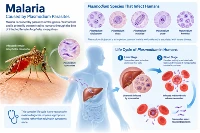
Malaria is a mosquito-borne disease that continues to affect millions of people in tropical and subtropical regions around the world. Although fever is one of its most familiar symptoms, malaria is more complex than a simple febrile illness. Understanding how the disease develops, how it is transmitted, and how it can be detected is an important part of early medical assessment.
Q
How Is Malaria Transmitted?
A
The most common route of transmission is through the bite of an infected female Anopheles mosquito. In special circumstances, malaria may also be transmitted through infected blood, contaminated needles, or from mother to child.
The transmission of malaria begins when an infected mosquito bites a person and introduces the parasite into the bloodstream. The parasite then develops inside the body and eventually reaches the red blood cells.
The symptoms of malaria can vary from person to person and may resemble those of other infectious diseases. Common symptoms include fever, chills, headache, fatigue, muscle aches, sweating, nausea and vomiting. Because these symptoms are not specific to malaria, people with suspected infection-particularly those who live in or have recently travelled to malaria-endemic areas-may require appropriate diagnostic testing.
Early recognition is important because P. falciparum infections can progress to severe disease. For this reason, malaria diagnosis generally relies on parasite-based testing, such as microscopy or rapid diagnostic tests, rather than clinical symptoms alone.

How Is Malaria Diagnosed?

There are several approaches to malaria testing, with different methods suited to different clinical and laboratory settings.
Microscopy is a traditional diagnostic method in which blood smears are examined under a microscope. When performed by trained personnel, microscopy can provide information about the presence and type of parasites and may also help assess parasite density.
Rapid diagnostic tests (RDTs) offer another practical approach. These tests use immunochromatographic technology to detect specific malaria parasite antigens in a blood sample. They generally require less equipment and can provide results within a relatively short period of time, making them useful in settings where laboratory resources or microscopy may be limited.
Molecular methods such as PCR can also be used to detect parasite genetic material and are particularly useful in specialized laboratory settings.
No single testing method is suitable for every situation. The appropriate approach depends on factors such as the suspected malaria species, available equipment, testing environment, and clinical circumstances. Test results should also be interpreted together with relevant clinical information.
For situations where a simple and relatively fast testing process is needed, malaria RDTs can provide useful diagnostic information.
Our Malaria Series Rapid Test Device is designed for the qualitative detection of Plasmodium falciparum antigen in human whole blood. The test can be performed using either fingerstick or venipuncture whole blood, with approximately 5 μL of blood required for testing. After adding the specified buffer, the result is read at approximately 10 minutes.
The testing process is straightforward: collect the whole blood sample, apply the sample and buffer to the test device, allow the chromatographic reaction to take place, and read the result within the specified time.
Like other diagnostic methods, the MAL-102 has a defined scope of use. It is a qualitative test for P. falciparum antigen and should not be used as the sole basis for clinical diagnosis. When results and clinical symptoms do not correspond, additional testing may be considered according to professional medical judgment.