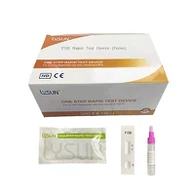



|
Product name |
Hepatitis A Virus Rapid Test Self-Test |
||||||
|
Item type |
HAV-W31-Ag |
||||||
|
Specimens |
Whole blood/Plasma/Serum |
||||||
|
Packing Specification |
1 kit/ box, 5 kits / box, 25 kits/ box |
||||||
|
Size |
|
||||||
|
Shelf life |
2 year |
||||||
|
Test Time |
Waiting about 15 minutes |
||||||
|
Certificate |
CE, ISO:13485 |
||||||
|
OEM |
Acceptable |
||||||
|
Service condition |
The kit should be stored at 2-30°C |
The characteristics of HAV IgM and IgG detection cards include:
Two simple explanations of the results
Room temperature storage or refrigeration (2-30 ℃)
Including internal controls
Contains reagents
Transmission route:
The most common mode of transmission is from mother to child during birth and childbirth, or through contact with blood or other bodily fluids during sexual intercourse with an infected partner.
Hepatitis B virus can also be transmitted through needle punctures, tattoos, punctures, and contact with infected blood and body fluids.
Symptoms:
Most people do not have obvious symptoms when newly infected.
Acute symptoms may include yellowing of the skin and eyes, dark urine, fatigue, nausea, vomiting, and abdominal pain.
Severe acute hepatitis may lead to liver failure and even death.
Prevention and treatment:
Hepatitis B can be prevented by safe and effective vaccines.
Patients with chronic hepatitis B can receive medication to reduce the risk of cirrhosis and liver cancer.
Global health issues:
The World Health Organization estimates that 296 million people will suffer from chronic hepatitis B infection in 2019, and 1.5 million new infections will occur every year.
Hepatitis B is a major global health problem, and the infection burden varies in different regions.