


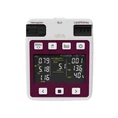
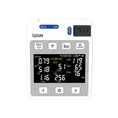
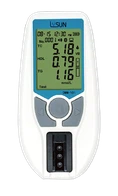

Product introduction
Syphilis Rapid Test Self-Test (Colloidal Gold) is a rapid visual immunoassay method used to qualitatively and inferentially detect Syphilis antibodies from blood samples. This test is used to help quickly identify Syphilis virus infections. There are two methods for Syphilis Rapid Test Self-Test: detecting whole blood and serum plasma samples.
|
Product name |
Syphilis Rapid Test Self-Test |
||||||
|
Item type |
SYP-W21 |
||||||
|
Specimens |
Whole blood/Plasma/Serum |
||||||
|
Packing Specification |
1 kit/ box, 5 kits / box, 25 kits/ box |
||||||
|
Size |
|
||||||
|
Shelf life |
2 year |
||||||
|
Test Time |
Waiting about 15 minutes |
||||||
|
Certificate |
CE, ISO:13485 |
||||||
|
OEM |
Acceptable |
||||||
|
Service condition |
The kit should be stored at 2-30°C |


Colloidal gold is negatively charged in a weak base environment, and can form a firm bond with the positively charged groups of protein molecules, because this bond is electrostatic binding, so it does not affect the biological properties of proteins. In addition to binding with proteins, colloidal gold can also be combined with many other biological macromolecules, such as SPA, PHA, ConA and so on. According to some physical properties of colloidal gold, such as high electron density, particle size, shape and color reaction, coupled with the immune and biological properties of the conjugate, colloidal gold is widely used in the fields of immunology, histology, pathology and cell biology. Colloidal gold labeling is essentially a coating process in which proteins and other macromolecules are adsorbed to the surface of colloidal gold particles. The adsorption mechanism may be that the surface negative charge of colloidal gold particles forms a firm bond with the positive charge groups of proteins due to electrostatic adsorption. Various colloidal gold particles of different sizes, that is, different colors, can be easily prepared from chlorauric acid by reduction method. This spherical particle has A strong adsorption function for proteins, and can be non-covalentially bound to staphylococcal A protein, immunoglobulin, toxin, glycoprotein, enzyme, antibiotic, hormone, bovine serum albumin polypeptide conjugation, etc., thus becoming a very useful tool in basic research and clinical experiments. The Immunogold labelling technique mainly uses the high electron density of gold particles. At the gold-labeled protein binding site, black-brown particles can be seen under the microscope. When these markers gather in large quantities at the corresponding ligand, red or pink spots can be seen with the naked eye. Thus used in qualitative or semi-quantitative rapid immunoassay methods, this reaction can also be amplified by the deposition of silver particles, known as immunobullion staining.